

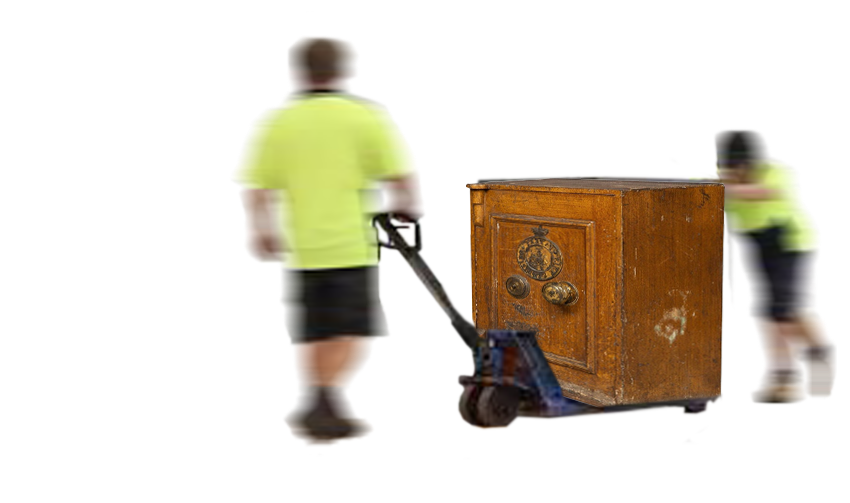
A heavy floor safe does not behave like a wardrobe or a fridge. It’s dense, awkwardly weighted, and often bolted into a position that was never meant to be disturbed.
Yet many homeowners and business owners across Sydney book a general removalist for this exact job, assuming a safe is just another heavy item on the inventory list. What they don’t know is that moving a safe or a fire-resistant filing cabinet requires specific lifting equipment. It requires floor protection and an understanding of weight distribution that most furniture movers have never trained for. Get it wrong, and the damage is clearly visible: cracked tiles, gouged stairwells, a safe dropped through a landing, or an injury that ends the job halfway through.
Choosing the right removalist for a safe move means asking different questions than you would for a standard move. Here’s how to find a specialist for safe removalists in Sydney.
Why Moving a Safe Is Nothing Like a Standard Furniture Move
A wardrobe can be tilted and shifted by two people without much risk. But a safe cannot. Most home and office safes weigh between 100 and 400 kilograms, concentrated into a single dense, rigid block with no give and no easy grip points.
That weight changes everything about how the move has to happen.
- There’s no flexing to work with. Furniture can be angled around a tight corner. A safe is a fixed shape that has to be carried, slid, or wheeled through exactly the space available; nothing more.
- The floor becomes part of the risk. A safe’s weight is concentrated on a small footprint, which can crack tiles, dent floorboards, or damage a staircase that furniture would never put under that kind of pressure.
- A wrong grip has real consequences. Dropping a wardrobe damages the wardrobe. Dropping a safe can injure the person carrying it or anyone standing nearby.
This is why specialised equipment, rigging, ramps, and trained techniques exist specifically for this job. It’s not the same job, just heavier.
What Can Actually Go Wrong With the Wrong Removalist
The risk of hiring the wrong service for safe removalists in Sydney rarely shows up on the quote. It shows up halfway through the job, when there is no way to undo what is already happening.
- Floors can crack under weight they were never built to hold. A safe’s full mass rests on a small footprint, and without proper load distribution, tiles, floorboards, and even concrete are at real risk of failing.
- Staircases can take damage that furniture never would. A safe dragged or shifted incorrectly down a staircase can crack treads, snap railings, or gouge walls along the way.
- The safe itself can be permanently compromised. A drop or a tip can bend the frame or knock the locking mechanism out of alignment, in some cases beyond repair.
- Someone can genuinely get hurt. A safe weighing several hundred kilograms that shifts unexpectedly on a ramp or staircase is not a minor mishap. It is a serious injury risk for anyone nearby.
Every one of these outcomes traces back to the same root cause: a company treating a safe like a heavy piece of furniture instead of the entirely different job it actually is.
How to Choose the Right Safe Relocation Services in Sydney
Once you know what is actually at risk, choosing the right company comes down to working through a few checks before you book, rather than ringing the first number that comes up in a search.
Step 1: Understand the Service
Not every removalist with “heavy item removal” on their website is actually talking about safes. Confirm upfront that the company specifically handles safes or fire-resistant cabinets, not just bulky furniture.
Step 2: Ask About Their Experience, Insurance, and Credentials
Find out how long a safe mover has actually been moving safes, not just how long they have been in the removals game. Then get them to confirm their insurance covers an item of your safe’s weight and value, because plenty of standard policies do not.
Step 3: Ask About Their Process
A company that knows this job will walk you through exactly how they plan to get your safe out of the property, through any tight spots, and onto the truck. If a safe mover cannot lay out the actual steps, they have not properly thought through your move.
Step 4: Get Quotes and Compare the Detail Behind Them
Once you have a shortlist, get quotes from each one. Do not just compare prices. Compare how specific each quote actually is, the equipment they will use, what the insurance covers, and how clearly they have explained their plan. A cheap quote with vague answers is rarely the better deal once something goes wrong.
Step 5: Match the Company to Your Specific Property
This is the final check, separate from the quote itself. Walk through your safe’s exact weight and location and the access involved (stairs, doorways, lifts), and get the company to confirm their team and gear can actually handle it. A confident, specific answer is what you are after. A general reassurance is not enough.
Working through these checks means you are choosing a safe mover based on what the company can actually back up, not just what they say over the phone.
Questions to Ask Before Booking a Safe Removalist
Beyond the basics of experience and insurance, these are the questions that actually separate a removalist who has handled difficult safe moves from one who has only ever had an easy one.
- “What happens if the safe ends up heavier than what I estimated?” A real specialist has a clear answer, because safes are routinely underestimated by the people who own them. A vague “we’ll figure it out on the day” is not a plan.
- “What is your worst-case scenario if something starts to go wrong mid-move, a corner slips, or the angle is off on the stairs?” Listen for an actual procedure, not just reassurance that it has never happened to them.
- “If the safe does not fit through the doorway or stairwell the way we expect, what is the next step?” This question alone tends to separate companies who have hit this exact problem before from ones who have not.
- “Will the same team that assesses the property be the team doing the move?” A different crew turning up on the day, with no knowledge of what was actually planned, is a common and avoidable failure point.
- “What is covered if something is damaged, and what is excluded?” Ask specifically what falls outside the policy, not just what is included.
These questions work because they push past the standard reassurances every company gives and into how a safe mover in Sydney actually handles the moment something does not go to plan.
Red Flags That Signal a Removalist Is Out of Their Depth
Most companies will not tell you outright that they are unsure about this job. They show it instead, in small ways, if you are paying attention before you commit to a date.
- They give you a price without ever asking the safe’s weight.
- They describe their equipment only as “standard moving gear.”
- They cannot tell you how many people will be on the job.
- They answer insurance questions quickly, with no real detail behind it.
- They seem more focused on booking you in than walking you through the plan.
None of these on their own mean walk away immediately, but the more of them you notice in one conversation, the clearer the picture becomes.
Conclusion
Moving a safe is not something you hand to whoever picks up the phone first. The weight involved, the risk to your floors and stairs, and the genuine chance of injury all come down to one decision: choosing a company that has actually done this before, with the right gear and an actual plan for your property.
If you have made it this far, you already know more than most people do before they book a safe mover in Sydney. Put it to use. Ask the questions, watch for the warning signs, and only go with a company that answers everything clearly and without hesitation.
If you are in Sydney and trying to work out who to trust with this, get in touch with Sydney Safe Removals for a quote. You will usually know within the first conversation whether you are talking to a genuine specialist or someone learning on the job.
Frequently Asked Questions (FAQs)
- How much does it cost to move a safe in Sydney?
Cost depends on the safe’s weight, the property’s access, and the distance involved. A proper quote should only be given after these details are assessed, not before.
- Can a general removalist move my safe instead of a specialist?
They can attempt it, but most general removalists lack the rated equipment and experience to do it safely, which increases the risk of property damage or injury.
- How heavy do safes usually get?
Home and office safes commonly range from 100 to 400 kilograms, with some safes and commercial units weighing significantly more.
- Will moving my safe damage my floors or stairs?
It can, if the company does not use proper load distribution and floor protection. A specialist plans for this before the move begins.
- What should I do if my safe does not fit through a doorway or stairwell?
A specialist removalist will assess this beforehand and have a plan, which may include disassembly options or alternative access points, rather than discovering the problem on moving day.


Leave A Comment