

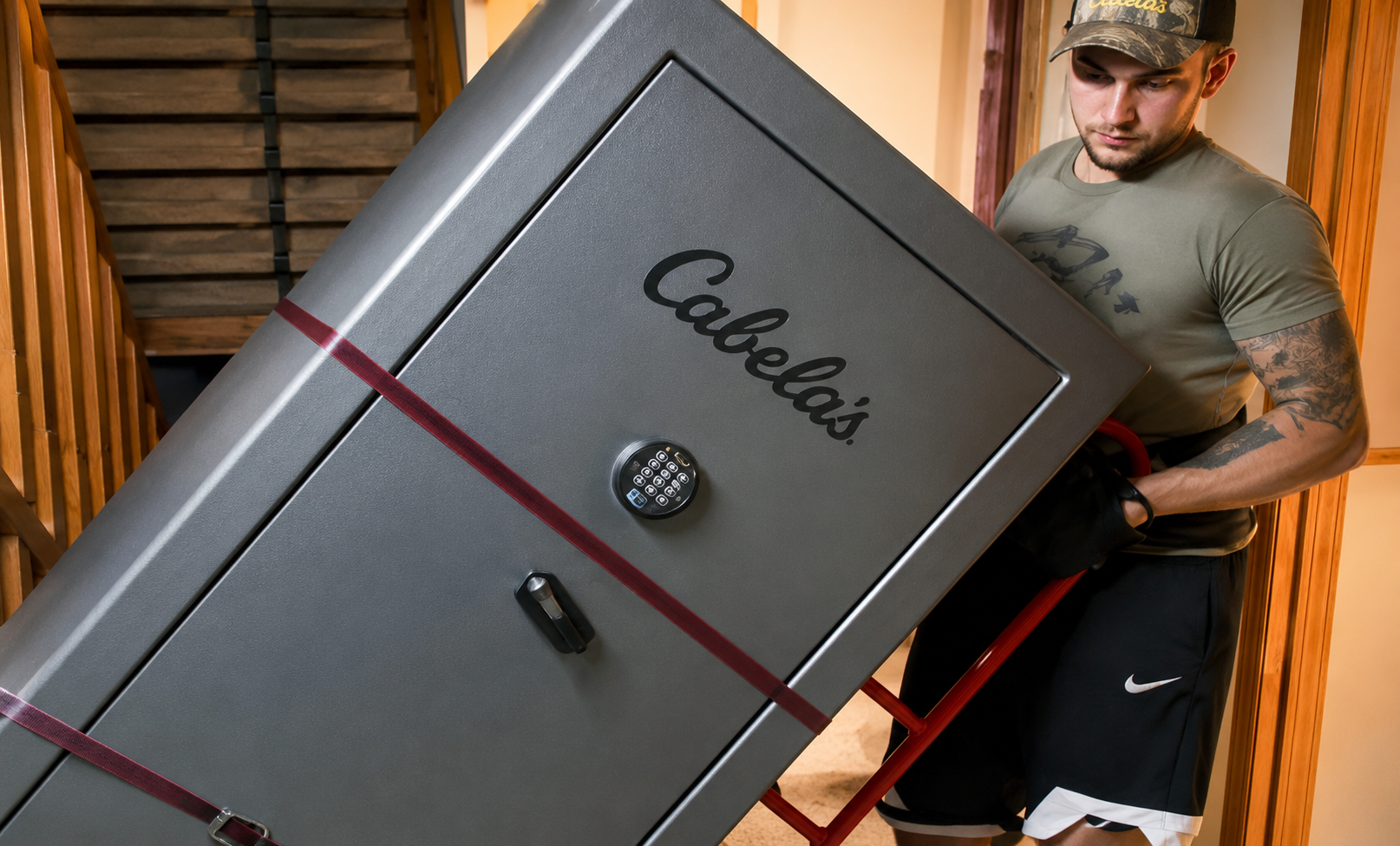
People who have safes in their home understand why it’s not something to attempt without the right people and the right equipment.
Safes are built to resist everything: forced entry, fire, and flood. That same construction is what makes moving heavy safes in Sydney one of the more technically demanding jobs in the removals industry. The weight is only part of it. The density, the shape, and the access conditions in most Sydney homes and offices turn what looks like a simple relocation into a job that requires specialist knowledge, proper equipment, and experience with exactly this type of work.
Get it wrong, and the consequences range from a scratched floor to a serious injury to a voided insurance claim. Plan the move smartly, and the safe arrives at its destination without incident, which is exactly how it should be. This guide covers everything worth knowing before the job begins.
Why Moving a Heavy Safe Is Not a DIY Job
A safe that weighs 200 kilograms does not behave like a fridge that weighs 200 kilograms. A fridge is hollow, has a handle, and distributes its weight across a large base.
A safe is solid steel with almost nothing to grip. All of that weight sits in a dense, low block that shifts unpredictably the moment it starts moving. Most people underestimate this until the safe is already in motion, and by that point the options are limited. Once it starts going in the wrong direction, there is very little a person can do to stop it without the right equipment.
The consequences are not minor. Hardwood floors, tiled entries, and staircases are all vulnerable to a safe being dragged or dropped incorrectly. In a Sydney apartment building, that damage can extend to common areas and trigger body corporate claims that cost considerably more than a professional removal would have. Beyond property damage, the injury risk is real. A safe that tips during a move can cause serious harm that has nothing to do with carelessness and everything to do with physics.
Types of Safes and What Makes Each One Difficult to Move
There are dozens of safes, and not each one of those presents the same challenge. This is because the type, weight, dimensions, and installations all determine how a heavy safe removal needs to be approached.
Here’s a breakdown of the most common types and what makes each one distinct from a moving perspective.
| Safe | Typical Weight Range | Key Moving Challenges |
|---|---|---|
| Home Safe | 60 to 200 kg | Often bolted to the floor or wall; extraction required before transport. |
| Office Safe | 100 to 400 kg | Heavier than home safes; damage to commercial premises is costly. |
| Cash and Jewelry Safes | 50 to 300 kg | Compact but extremely dense; deceptive weight for their size. |
| Fireproof Document Safes | 80 to 250 kg | Fireproofing material adds significant hidden weight; distributed differently from a standard safe. |
What the table does not show is the access factor. Weight is only part of the equation. Where the safe is and how it needs to get out is what determines how the job is planned and priced.
What a Professional Safe Removalist Actually Does
Most people assume safe removal is heavy lifting with better equipment. The reality is that a professional team approaches the job the way a surgeon approaches an operation: the preparation takes longer than the procedure, and what happens before anything moves determines whether everything after it goes smoothly.
Specialised Equipment Used by Safe Movers
The gap between a professional safe removal and an amateur attempt almost always comes down to what arrives with the team before the job starts. Standard furniture removalists carry trolleys and straps designed for refrigerators and washing machines. Safe removalists carry something different entirely.
A properly equipped team works with:
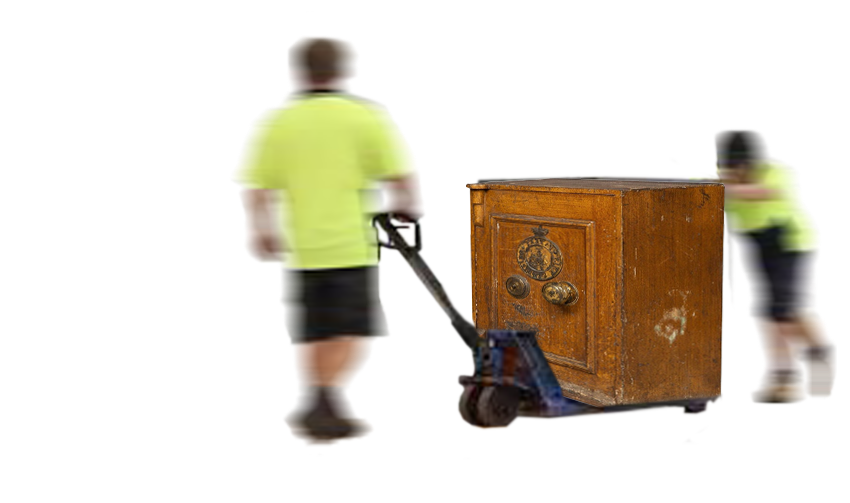
- Heavy-duty dollies and pallet jacks built for loads that would buckle standard moving equipment
- Powered stair climbers that carry the safe up or down a staircase in a controlled sequence rather than relying on manpower and momentum
- Custom rigging including heavy-duty chains, straps, and slings rated for the specific weight being moved
- Floor protection boards, padding, and friction runners that go down before the safe moves a centimetre, covering every surface on the route from the safe’s position to the truck
- Hydraulic tailgates for loading and unloading without the risk of a drop that could damage the safe, the vehicle, or anyone nearby
- A minimum of four tie-down chains fastened to the front and back corners of the trailer in transport, distributing weight evenly and eliminating any movement during transit
Each piece of equipment is selected based on the specific safe, the specific property, and the specific route. There is no one-size-fits-all setup for this kind of work.
Moving Heavy Safe Process: Step-by-Step
Every stage of a professional heavy safe removal is deliberate. The order matters, the preparation matters, and nothing is left to chance.
- Site assessment and route planning
Before anything is touched, the team measures every doorway, hallway, and staircase on the route. The safe’s weight and dimensions are confirmed, obstacles are identified, and the safest path from the safe’s current position to the vehicle is mapped out in detail. This stage determines what equipment is needed and where the highest risk points in the move are. - Extraction and floor protection
If the safe is bolted to the floor or wall, it is unbolted and extracted from its position carefully before any moving equipment is brought into the space. Floor protection goes down across the entire route before the safe moves an inch. In Sydney homes with tiled entries, polished timber floors, or carpeted staircases, this step is what prevents the majority of property damage claims. - Securing and rigging
The safe is wrapped in protective padding and secured to the appropriate moving equipment. On staircases, the team works in a controlled sequence with clear communication throughout, one person managing the load from above, another guiding from below, and no movement happening until every person is in position. - Loading and transport
Once on the vehicle, the safe is chained down front and back before the truck moves. The load is inspected before departure and monitored during transit. Speed limits are observed throughout, and the load is checked again on arrival. - Delivery and final placement
At the destination, the assessment happens again. The route into the new location is checked, protection goes down, and the safe is moved into its final position with the same care as the extraction. If rebolting or reinstallation is part of the job, that is completed and confirmed before the team leaves the site.
Common Mistakes People Make When Moving Heavy Safes
Most problems that occur during a heavy safe removal are avoidable. They tend to follow the same pattern regardless of whether the safe is in a home or an office.
Attempting the move without specialist help
The most common mistake is also the most costly. A safe that looks manageable from a distance rarely is once it starts moving. Without the right equipment and the right technique, the safe goes where gravity takes it rather than where the person moving it intends.
Hiring a general removalist instead of a specialist
General removalists are skilled at what they do, but moving a 300 kilogram safe through a narrow Federation-era hallway in Balmain is not the same job as moving a sofa. A team without specialist equipment and experience with heavy safe removals in Sydney is taking on a job they are not equipped for, and the consequences of that show up quickly.
Not measuring access points before the job
A safe that cannot fit through a doorway or around a staircase landing does not become easier to deal with on the day. Checking clearances before booking is not optional. A safe that needs to go through a window or over a balcony because the hallway is too narrow requires a completely different approach and significantly more planning.
Leaving valuables inside the safe during the move
Removing loose items from inside the safe before it is moved reduces the overall weight and eliminates the risk of internal damage during transit. Documents, jewellery, and firearms should be removed and stored securely before the removal team arrives.
Conclusion
Moving a heavy safe is one of those jobs where the difference between getting it right and getting it wrong comes down to one thing: expert handling. There are no gradual consequences or any warning signs that appear before something goes wrong. The cost of fixing the damage is considerably higher than the cost of doing it properly from the start.
If you have a safe that needs to move, whether it is a home safe in a tight hallway or a fire-resistant cabinet in a commercial space, the question is not whether you need a specialist. It is who you can trust to handle it.
Sydney Safe Removals has been moving heavy safes across Sydney, the Blue Mountains, Central Coast, and Wollongong for over 20 years. Every job is fully insured, properly equipped, and handled by a team that does this work and nothing else. Get in touch today for a straightforward quote and find out what the job actually involves before anyone sets foot near your safe.
Frequently Asked Questions (FAQs)
How much does it cost to move a heavy safe in Sydney?
Most residential safe removals in Sydney start from around $250, with the final cost depending on the weight of the safe, access conditions, and distance involved.
How do I prepare my safe for removal before the team arrives?
Remove all contents, locate the key or combination, clear the path to the nearest exit, and let the team know in advance if the safe is bolted down.
Can a heavy safe be moved up or down stairs safely?
Yes. Professional safe removalists use powered stair climbers designed to carry the load in a controlled sequence, which standard moving equipment cannot do safely.
How long does a professional safe removal take in Sydney?
Most jobs are completed within one to three hours, depending on the size of the safe, access conditions, and distance to the destination.
What information do I need to provide when getting a quote for safe removal?
The type of safe, its weight and dimensions, which floor it sits on, the access conditions, and the destination address.


Leave A Comment